
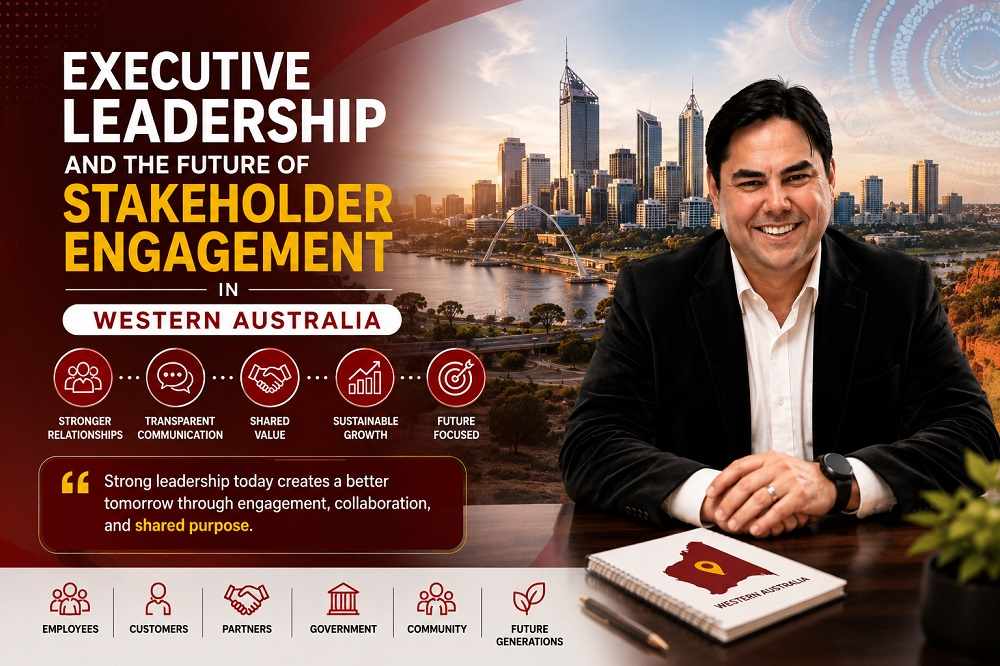
In today's business environment, organisations succeed by more than delivering quality products or achieving strong financial results. Long-term success increasingly depends on the ability to develop trusted relationships with the people who influence business performance. Employees, customers, investors, suppliers, government agencies, Indigenous organisations, and local communities all play an important role in shaping an organisation's future. As a result, stakeholder engagement has become one of the most valuable leadership capabilities in modern business.
For professionals researching Matthew Slack Perth, effective stakeholder engagement reflects a leadership philosophy centred on transparency, collaboration, responsible governance, and sustainable organisational growth.
Business Success Starts with Strong Relationships
Every successful organisation relies on relationships built over time. Trust encourages cooperation, strengthens loyalty, and creates opportunities for long-term partnerships that benefit everyone involved.
Businesses that actively engage stakeholders gain a better understanding of expectations, concerns, and opportunities before making important decisions. Rather than relying solely on internal perspectives, executive leaders seek feedback from the people directly affected by organisational strategies.
This relationship-focused approach creates confidence among stakeholders while improving the quality of business decisions.
Strong engagement also helps organisations respond more effectively to changing economic conditions, industry trends, and customer expectations.
A Culture of Communication Creates Competitive Advantage
Communication has become one of the defining characteristics of effective executive leadership.
Modern stakeholders expect businesses to communicate openly, provide accurate information, and explain how decisions are made. They value organisations that encourage dialogue rather than one-way communication.
Businesses across Western Australia are adopting communication strategies that include employee forums, customer engagement initiatives, community consultations, digital feedback platforms, and regular stakeholder updates.
These initiatives create opportunities for meaningful conversations that strengthen relationships while improving organisational understanding.
When communication becomes part of organisational culture, trust develops naturally and collaboration becomes easier to achieve.
Stakeholder Engagement Enhances Strategic Planning
One of the greatest advantages of stakeholder engagement is its ability to improve strategic planning.
Executive leaders who regularly consult stakeholders gain valuable insights that support better decision-making across the organisation.
Employees understand operational challenges.
Customers identify changing market demands.
Suppliers recognise industry developments.
Government agencies provide regulatory guidance.
Community representatives highlight social and environmental priorities.
Bringing these perspectives together enables organisations to develop strategies that are realistic, balanced, and responsive to external expectations.
This broader understanding often leads to stronger business performance and greater organisational resilience.
Governance and Accountability Go Hand in Hand
Strong governance depends on more than policies and compliance frameworks. It requires executive leaders to remain accountable to the people affected by organisational decisions.
Stakeholder engagement strengthens governance by encouraging transparency throughout decision-making processes.
Regular consultation provides boards and executive teams with reliable information that supports effective oversight while improving risk identification.
When organisations openly explain their objectives, listen to stakeholder feedback, and respond appropriately, they build greater confidence in their leadership.
This commitment to accountability strengthens corporate reputation and contributes to long-term organisational stability.
Empowering Employees Through Engagement
Employees remain one of the most influential stakeholder groups within any organisation.
Businesses that encourage employee participation create workplaces where innovation, collaboration, and continuous improvement become everyday practices.
Leadership communication, mentoring opportunities, professional development, and employee recognition programs all contribute to higher levels of engagement.
When employees believe their opinions are respected, they are more likely to contribute ideas that improve productivity, customer service, and operational performance.
An engaged workforce also adapts more effectively to organisational change and supports long-term business objectives.
Investing in people remains one of the strongest investments an organisation can make.
Collaboration Supports Sustainable Growth
Across infrastructure, mining, healthcare, technology, energy, construction, and government sectors, stakeholder engagement has become essential for successful project delivery and sustainable growth.
Large projects often involve multiple organisations, contractors, Indigenous communities, regulators, investors, and local residents. Establishing open communication from the earliest planning stages creates stronger partnerships and reduces the likelihood of conflict or delays.
Collaboration also enables organisations to identify opportunities for innovation while balancing commercial objectives with community expectations.
Businesses that value partnership rather than simple consultation are better positioned to deliver successful outcomes that benefit both the organisation and its stakeholders.
Looking to the Future
As industries continue to evolve, stakeholder engagement will remain a defining feature of effective executive leadership. Organisations that prioritise transparency, collaboration, ethical governance, and meaningful communication will continue to build stronger reputations and lasting business success.
The leadership principles associated with Matthew Slack Perth demonstrate how stakeholder engagement contributes to smarter decision-making, stronger governance, improved organisational resilience, and sustainable growth. Businesses that place relationships at the centre of their strategy will be better prepared to navigate future challenges, strengthen stakeholder confidence, and create long-term value in an increasingly connected and accountable business environment.





Write a comment ...